
Your (Bricked) Legs Aren't Lying to You
The science behind that post-T2 feeling

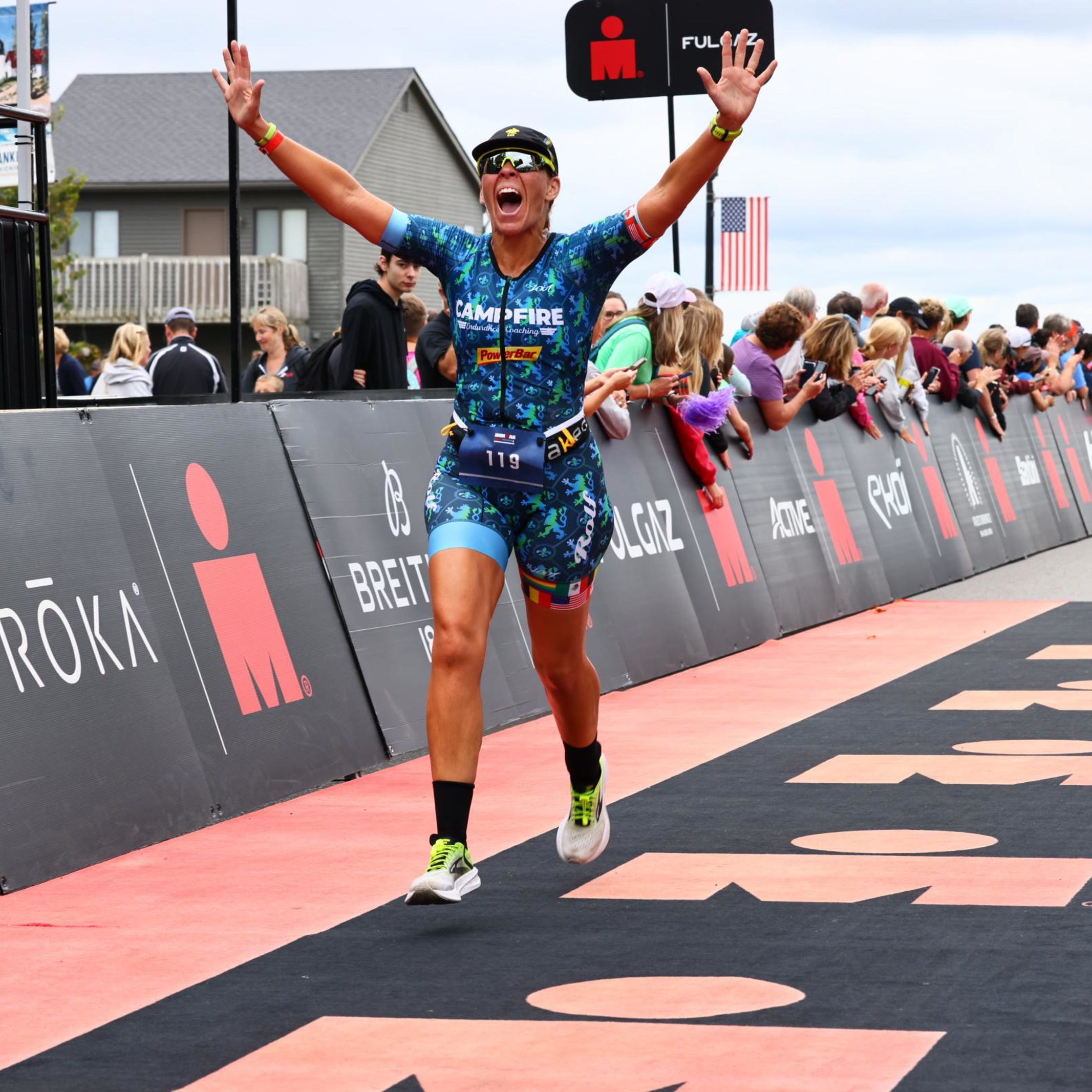
Triathlon lore disagrees about the origin of the term “Brick Run.” Some coaches and athletes believe that the dead, heavy sensations one experiences running off the the bike resulted in the term “brick.” Other, more…literally inclined scholars point to the “B(ike) R(un)” beginning of the word “BRick” for its provenance. Does the “ick,” then, correlate to how one feels? Perhaps, but it seems a reach.
Regardless, running off the bike is what makes triathlon triathlon (or duathlon duathlon, but those people are nuts), and since the 1970s athletes, coaches, and researchers have been trying to figure out how to smooth out this difficult and uncomfortable aspect of our sport. When you run after cycling, your legs often feel like they don’t work, and your brain panics, wondering why you’re moving so much slower than you feel that you’re going.
Triathlon is not simply the sum of swimming, cycling, and running, however. It is a unique discipline that includes those sports but is not solely defined by any of them. A key step in improving your transitions is to stop thinking of the three sports as discrete—success requires linking all three together, and our transitions offer the opportunity to create a smooth experience, one that your legs (and your run split) will thank you for.
The cost of ignoring your transitions? An 11-12% reduction in running performance after the bike compared to fresh legs. Elites and well-trained triathletes can get that number down to 1-2%. If you can run a 1:40 half-marathon fresh, that might mean the difference between running a 1:52 in competition to a 1:42.
Do I have your attention now? First we’ll walk through why running off the bike is so hard on your body and brain, and then give you practical tips for how to make your transition training better.
What The Bike Does to You Before the Run
The bike doesn’t just tire you out — it changes the conditions of your body under which you’ll have to run. Making deliberate changes to your training and your T2 execution, then, will improve your run leg. Three parts of your physiology influence running off the bike: your nervous system (and subsequent running form), your fueling,and your breathing.
Nervous System
When we talk about the nervous system, we talk about the signals our muscles get from our brain and spinal cord, the type of contraction in the muscles, and how we interpret those signals to move our bodies through space. Cycling is exclusively concentric in the type of contraction it requires to move the body forward. A concentric contraction is one where the muscle shortens while it creates force: a biceps curl is a great example. As you contract the muscle to lift the weight, the muscle shortens. Go ahead and curl something right now—notice that the biceps moves towards your shoulder and appears to get shorter—you just performed a concentric contraction. Running, on the other…limb (ha), requires eccentric contractions: the muscle lengthens as it contracts. Go back to your biceps curl. Lower the weight, now, just like you would in a gym. You’ll notice the muscle is still doing work (otherwise you’d just drop the weight on the ground), but now the muscle is getting longer.
Eccentric contractions cause more muscular microtrauma, and that makes sense, right? The muscle contracts AND gets longer—we’re stressing it in two directions. This is the reason you’re more likely to be sore after a run than a bike ride: concentric contractions do less damage to the muscle.
Shifting between the two types of contractions feels awful, like shifting a manual transmission without putting in the clutch, and that awfulness is part of what makes transitions so challenging. While we can’t change the nature of the activity (run gonna eccentric), we can prepare for it through practicing, which we’ll cover in the third section today.
The second nervous system component is our sense of our bodies in space in general, and our cadence in particular. Athletes with greater proprioception (the ability to sense intuitively where your body exists in space) seem to transition better, and are more able to control their running cadence. This control is important because, along with shifting muscular contractions, our bodies aren’t crazy about big changes in cadence from the bike to the run. Run cadence optimizes around 88-92 rotations per minute (i.e. a cycle of both feet landing on the ground), and if your bike cadence is much lower or higher than that, you’ll confuse your body and make the transition harder. If you can aim for a bike cadence in the 80-90 RPM range, you’ll be able to shift to that 88-92 run cadence with less adjustment time.
Fueling and Breathing
If you don’t fuel effectively on the bike, or your pacing is poor (lots of surging), you will exhaust most of your glycogen stores in the muscles of the legs. Losing that glycogen is a big problem, especially if you make it worse by not fueling effectively on the bike. While glycogen depleted, your body will go looking for other fuel sources: fat oxidation, in particular. While it’s great to use fat as a fuel, there is a speed limit when relying solely on fat. Dehydration, too, has an effect, reducing stroke volume (the amount of blood pumped per heartbeat). These two factors will make running feel awful, as your body complains at the change in intensity without adequate fuel. This doesn’t really need to be said, but fueling properly is the basic price of admission for endurance sports in general and triathlon in particular. Don’t let something as simple as fueling ruin your transitions, let alone your race. If you don’t pay attention to your fueling, your body has to work harder to maintain the same output—that’s the opposite of what we’re trying to do.
Breathing, too, plays a role. Your ventilatory muscles such as your diaphragm and and intercostal muscles (the little muscles in between your ribs that, when they spasm, cause those “side stitches”) can fatigue during cycling, especially if you have not trained adequately for your event or paced poorly. If these muscles are tired when you begin the more intense run leg, it will feel more difficult to get the oxygen you need. The effect is most pronounced in the first 7 minutes of the run, but that period can be shortened or eliminated completely with proper training.
What Running After Cycling Looks Like For Your Body
The difference between a transition run and a control run is measurable — and the gap is wider depending on who you are and how you rode. TL;DR? The elites who train A LOT have better transitions, primarily because the fitter you are the less the bike will take out of you. Many of the studies we looked at show a dramatic contrast between amateurs and elite triathletes. More research is necessary, but the difference is likely due to training density and a better training environment: less stress and more rest will improve all aspects of performance.
Elites are about 1.5% less efficient running off the bike than running by itself, but amateurs displayed an almost 12% drop in economy/efficiency. Juniors, too, even in elite development circumstances, showed a bigger drop than 1.5%, which suggests that the more you perform transitions the better you get at them. So the best way to get to Carnegie Hall is, still, to practice.
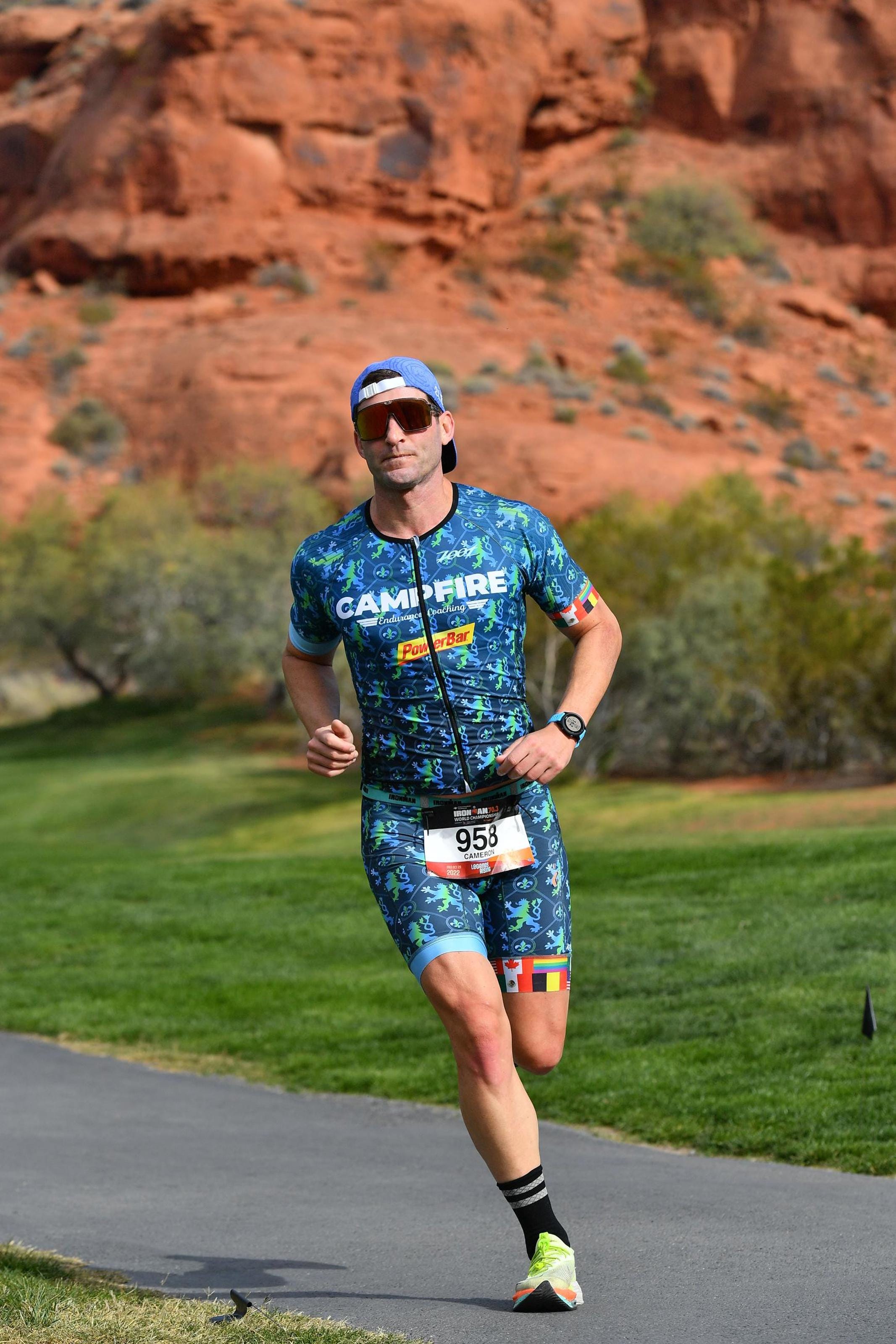
Two significant “tells” can let us know if someone runs off the bike effectively. The first is one you’ve likely seen before if you’ve ever spectated an Ironman: a pronounced forward lean of the trunk but not the whole body. If you’ve seen athletes running bent double, you’ve seen this problem in action. Triathlon’s cycling position plus trunk weakness in athletes (the muscles of the abdomen, lower back, hip flexors, and glutes) results in a tipped forward pelvis, called anterior pelvic title. If you haven’t built up the strength of this part of your trunk (sometimes called the core), you will experience the dreaded “hunchback” position on the run. Running in this way inhibits hip extension and will shorten your stride length—which will slow you down.
Finally, variable intensity intensifies the biomechanical issues. Draft-legal races, with its surges, attacks, and gap-crossings, makes for a highly variable situation. Many of the studies used steady state cycling in their experiments, which is a problem because draft-legal racing is anything but steady state. One study did use variable intensities and saw that performance in running was worse for this group. You can’t change the race dynamics of your chosen discipline, but you can prepare for it. If you’re doing draft legal racing, you need to practice variable intensity and then running off the bike. If you’re a non-draft athlete, then you can use this information even more: avoid variability at all costs. Don’t attack, sprint, get out of your saddle, surge and slow, or chase down the female professionals, Broheim. Doing so will decidedly hurt your run off the bike.
What To Do About It
The bike-to-run adaptation is trainable. You don’t need to do endless bricks — you need to do the right kind, and simply “practicing your transitions” isn’t enough. You also have to consider training style and execution prior to T2 and right after it. Right off the bat we can tell you to stop doing long brick runs. They don’t help. In fact, long bricks may hurt your overall performance because you replace a chunk of time with a tired, biomechanically inefficient run. That moves you away from your goal, not towards it. Instead, program in workouts where you might get 3-4 cracks at transition instead of just one. A session where you warm up, and then perform 3-4 reps of 20-30’ of riding followed by 5-10’ of running is an excellent session for improving your transitions. There is a workout like that detailed at the end of this section, but first, let’s talk about the end of the bike and the beginning of the run.
The Two Kilometers that Matter
Your transition begins about a kilometer from T2. As you reach this point, drop the intensity and bring the cadence close to the running cadence you have trained, which is likely in the 85-92 RPM range (if your running cadence is lower than that, it will serve you to bring that cadence up, but that’s not what we are doing today). Make sure you get your last fluid and food during this easier kilometer.
Inside T2 stay relaxed. If you’ve ever been to a “Transitions Clinic,” this is likely the only part they taught you, and it’s an important part but not everything about transitions. Transitions should be simple, feature as little equipment as possible, and should follow a repeatable pattern: rack bike, remove helmet, put on socks (if you do) and running shoes, grab your run stuff (hat, number belt, gels/chews), and head for run out, putting on your number as you go.
The first kilometer is when we can expect all of the discomfort of transition occurs, and the change from mostly horizontal to vertical from bike to run also causes some dislocation as your heart has to pump blood vertically again (that’s the dizziness that you experience during transition). How do we deal with this, then? By running easy but fluidly in the first kilometer. If you have practiced your transitions effectively and built up your total volume, you will notice that this first kilometer feels more and more natural over time. This ease is why elites show better transition performance than the rest of us: they’ve practiced this 2 kilometer window again and again, and they train a lot. Did you think you’d get an article from me that didn’t focus on aerobic conditioning? I always find a way to sneak that in.
Have a Plan for Getting Punched in the Face
“Everyone has a plan until they get punched in the face,” is the immortal lesson from the more mortal Mike Tyson, and he is correct: it’s easy to say what you’re going to do until you’re faced with the reality of what you’re trying to do. Instead of leaving all of this to chance, lay out a list of challenges you’ll experience in the first kilometer off the bike: harder breathing, heavy legs, difficulty finding a rhythm. If you know what’s going to happen, even if it’s “negative,” then when those things happen you are not only prepared for them, you get to tell yourself that another aspect of your race is going perfectly to plan. That type of encouragement snowballs, because your brain and heart see that you are in control and they relax, allowing you to have the performance you desire.
CONCLUSION
Triathlon has always been sold as three discrete sports stitched together by two transitions, but really it’s one distinct type of endurance sport, not a Frankensport of mismatched elements. The best athletes treat it as one, knowing that wasted energy in the swim results in a worse bike, and a worse bike translates into a poor run. Transitions are another opportunity to save energy, provided you prepare for them effectively.
The bike changes your fuel state, your breathing efficiency, your muscle coordination, and your biomechanics. Running after cycling is objectively harder than running fresh, and the size of that penalty depends on how trained you are and how you rode. The gap is measurable and trainable, so train the links, not just the disciplines. Race-pace bricks with variable cycling and deliberate transition practice are the tools. Your run doesn’t have to fall apart after the bike. It just needs practice surviving it.
Sample Session
Warmup on the bike with 20-30’ of easy cycling, then:
Four times through the following:
15-20 of cycling, with the final 5 minutes of the interval at goal race pace intensity
Transition quickly and smoothly off the bike and into your running equipment
Run 1k as an out-and-back (you may have to set up your run course ahead of time), focusing on rhythm and fluidity in the first 500m, and then building to race pace in the second 500m
Give yourself a few minutes of recovery before you get back onto the bike and start your next set
Sources
Citation: Millet GP, Vleck VE. Physiological and biomechanical adaptations to the cycle to run transition in Olympic triathlon: review and practical recommendations for training. Br J Sports Med. 2000 Oct;34(5):384-90. doi: 10.1136/bjsm.34.5.384. PMID: 11049151; PMCID: PMC1756235.
2. Walsh, J.A. (2019). The rise of elite short-course triathlon re-emphasises the necessity to transition efficiently from cycling to running. Sports, 7(5), 99.
3. Bonacci, J., Saunders, P.U., Alexander, M., Blanch, P., & Vicenzino, B. (2011). Neuromuscular control and running economy is preserved in elite international triathletes after cycling. Sports Biomechanics, 10(1), 59-71.
4. Zwetsloot, K.A. et al. (2022). Prolonged cycling lowers subsequent running mechanical efficiency in collegiate triathletes. BMC Sports Science, Medicine and Rehabilitation, 14, 149.